Tested 7 VR Apps for Daily Joy: The One That Gave Me Flexibility I Didn’t Know I Needed
Life moves fast — between work, family, and trying to stay sane, who has time for *more* routines? I used to think virtual reality was just for gamers or tech geeks. But one rainy Tuesday, curiosity led me to try a simple VR app, and everything shifted. Suddenly, I wasn’t just escaping reality — I was reshaping it. It helped me bend my day in ways I never thought possible, fitting joy, focus, and calm into the smallest moments. This isn’t about futuristic gadgets — it’s about real life, better. And if you’re wondering whether VR could actually fit into *your* life, not as a distraction but as a quiet helper, let me tell you: it already has into mine.
The Moment Everything Changed: How a Simple VR App Broke My Daily Routine
It started with a morning that felt like it was already over before it began. My youngest spilled oatmeal on the carpet, my oldest couldn’t find her school project, and I realized halfway to work that I’d forgotten my lunch — again. By 10 a.m., my shoulders were tight, my thoughts were racing, and I felt like I was failing at everything. That night, after the kids were in bed and the kitchen finally cleaned, I remembered a VR headset my sister had sent months ago. 'Try it when you need a break,' she’d said. I’d rolled my eyes then. But that night, I dug it out.
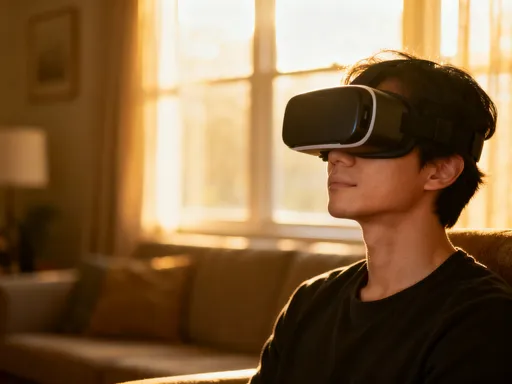
I put on the headset, not expecting much — maybe a few minutes of distraction. I opened a basic nature app, one with a quiet forest path and soft birdsong. Within seconds, I was standing under tall trees, sunlight filtering through the leaves, a gentle breeze brushing my face — all virtual, yes, but *real* in how it made me feel. I walked slowly along the path, breathing deeply. Ten minutes passed like five. When I took the headset off, something had shifted. My mind wasn’t racing anymore. My body felt lighter. I even smiled — actually smiled — at the pile of laundry on the couch.
That was the moment I realized: this wasn’t about escaping life. It was about returning to it, refreshed. I hadn’t fixed my schedule, but I’d changed how I experienced it. And for the first time in months, I felt like I wasn’t just surviving — I was present. I remember thinking, *Why didn’t anyone tell me about this?* Not because it was flashy or high-tech, but because it worked. It gave me back a sense of control, not over my to-do list, but over my inner world. That night, I didn’t just go to bed. I went to sleep with a quiet mind — something I hadn’t known I’d been missing.
From Escapism to Empowerment: Rethinking What VR Can Do
Like most people, I used to think of VR as something for teenagers with too much free time or tech enthusiasts with expensive hobbies. It was for flying spaceships or fighting zombies, not for moms juggling school pickups and grocery lists. But that forest walk changed my mind. I started seeing VR not as an escape, but as a tool — one that could help me reclaim the tiny gaps in my day. You know those moments: waiting for the oven timer, sitting in the car during a soccer practice, or standing at the sink washing dishes. We call them 'dead time,' but what if they didn’t have to be?
I began experimenting. Instead of scrolling through social media during my afternoon coffee break, I’d put on the headset for five minutes. I’d find myself on a quiet beach, waves lapping at the shore, seagulls calling in the distance. No demands, no notifications, no one needing anything from me. Just me, breathing, being. And when I came back, I didn’t feel like I’d wasted time — I felt like I’d invested in myself. The difference was subtle but powerful. My old routine was rigid: work, chores, family, repeat. But VR helped me create a new rhythm — one that allowed for pauses, for stillness, for breath.
It wasn’t about adding more to my day. It was about making space within it. I realized that flexibility isn’t just about managing time — it’s about managing energy. And VR became my secret tool for recharging without leaving the house. I wasn’t hiding from my responsibilities. I was showing up for them with more patience, more clarity, and yes, more joy. The shift wasn’t dramatic, but it was real. My husband noticed. 'You seem… calmer lately,' he said one evening. 'Like you’re not always on the edge.' That meant more than any five-star review ever could.
Finding the Right App: Why Simplicity Won Over Flashy Features
Of course, not every VR experience was a winner. I tried seven different apps over a few weeks, from high-energy fitness programs to virtual travel tours of Paris and Bali. Some were impressive — stunning graphics, immersive sound, lots of options. But most left me feeling overwhelmed, not relaxed. One meditation app had so many settings and voice choices I spent more time setting it up than actually meditating. Another promised 'instant calm' but played loud, dramatic music that made me more anxious.
Then I found it — a simple app called *Tranquil Spaces*. No flashy trailers, no celebrity endorsements. Just a clean interface, soft lighting, and a few gentle environments: a forest, a beach, a mountain meadow. What made it different was how it adapted to me. Instead of forcing me into a 20-minute session, it offered micro-experiences — two minutes, five minutes, ten. I could start small, especially on chaotic days. The visuals weren’t hyper-realistic, but they felt *right*. The colors were soothing, the movements slow, the sounds natural. It didn’t try to impress me. It just wanted to help.
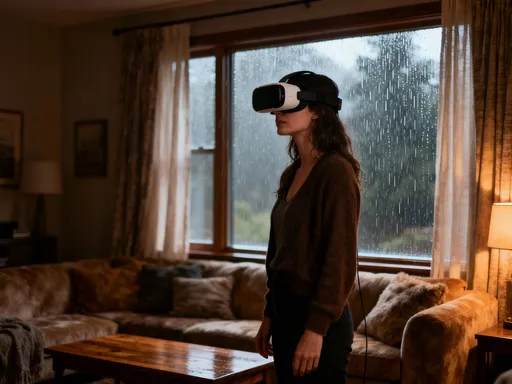
I remember the first time I used it during a stressful afternoon. The kids were arguing, the dog was barking, and I had a work deadline in two hours. I stepped into the bedroom, put on the headset, and chose the 'Sunset Garden' setting. Within seconds, I was standing in a quiet courtyard, warm light falling over stone paths, flowers swaying in a soft breeze. I didn’t do anything. I just stood there, breathing. When I took the headset off five minutes later, the noise was still there — but I wasn’t drowning in it. I felt centered. That’s when I knew I’d found something special. It wasn’t the most advanced app. It wasn’t the most popular. But it was the one that *fit* my life — not the other way around.
How VR Became My Secret Weapon for Family Time and Personal Space
One of the biggest surprises was how VR actually improved my relationships — especially with my family. I used to think taking time for myself meant leaving the house, booking a massage, or waiting for a rare weekend alone. But those moments were few and far between. VR gave me a new way to create personal space — without going anywhere. And that made all the difference.
I started using short VR sessions as emotional reset buttons. When I felt my patience slipping — maybe during homework battles or dinner meltdowns — I’d excuse myself for five minutes. 'Mommy’s going to take a quick break,' I’d say. I’d put on the headset and step into a quiet forest or a starry night sky. No one interrupted me. No one needed anything. And when I came back, I wasn’t just calmer — I was more present. I could listen without reacting. I could respond instead of snapping.
My husband noticed the change. One night, after I’d used VR during a tense moment with the kids, he said, 'You’ve been… easier to be around lately.' I laughed, but it hit me. He wasn’t just noticing my mood — he was feeling the difference in our home. And my kids started asking, 'Did you go to your quiet place, Mom?' not with guilt, but with understanding. They knew I wasn’t abandoning them. I was coming back better. That shift — from guilt to grace — was everything. VR didn’t replace family time. It protected it. By giving me a way to recharge in real time, it helped me show up as the mom and partner I wanted to be, not just the one I was too tired to be.
Building a Flexible Habit: Making VR Work in Real Life
Here’s the truth: I don’t use VR for hours. I don’t have that kind of time. What makes it work is that it fits into my life — not the other way around. The key wasn’t finding the perfect moment. It was creating tiny, consistent ones. I started by placing the headset on the coffee table, right next to my favorite mug. That visual cue made it easy to remember. I linked my sessions to existing habits: after my morning coffee, during my afternoon tea, or right before bed.
I also stopped aiming for perfection. Some days, I only had two minutes. That was enough. Other days, I’d go longer if the house was quiet. The app I use doesn’t judge me for short sessions. It doesn’t send guilt-tripping reminders. It just welcomes me back, every time. I also use audio cues — a soft chime that plays when the session ends — so I don’t lose track of time. No alarms, no stress. Just a gentle nudge back to reality.
What surprised me most was how quickly it became second nature. I don’t have to convince myself to do it anymore. It’s like brushing my teeth or making my bed — a small act of care that makes the rest of the day run smoother. And because it’s so low-pressure, I never feel like I’m failing if I miss a day. I just start again. That flexibility — the ability to adapt, not quit — is what makes it sustainable. This isn’t about discipline. It’s about kindness. And in a world that tells us we have to do more, be more, give more, sometimes the most radical thing we can do is pause — and let technology help us breathe.
Beyond Relaxation: Unexpected Wins in Focus, Creativity, and Confidence
I expected VR to help me relax. I didn’t expect it to change how I think. But over time, I noticed subtle shifts in other areas of my life. At work, I found myself solving problems more clearly. Ideas that had felt stuck started to flow. I remember one morning, after a virtual sunrise session, I woke up with a solution to a project I’d been struggling with for weeks. It wasn’t magic — it was mental space. VR had given me the quiet my brain needed to reconnect the dots.
Sleep improved too. I used to lie in bed, replaying the day’s stresses. Now, I end my evening with a short VR wind-down — a quiet meadow under a starry sky. It signals to my body that it’s time to rest. No screens, no blue light, just calm. And I fall asleep faster, stay asleep longer.
But the biggest surprise was confidence. Not the loud, flashy kind — the quiet certainty that I can handle what comes. Whether it’s a tough conversation, a last-minute change in plans, or just a messy kitchen, I feel more grounded. I’m not perfect. I still have bad days. But I recover faster. I make decisions with more clarity. I trust myself more. VR didn’t give me superpowers. It gave me back my balance. And from that balance, everything else — focus, creativity, calm — began to grow.
Why This Isn’t Just a Gadget — It’s a New Way to Live
Looking back, I realize that VR didn’t change my life by adding something new. It changed it by revealing what was already possible. It taught me that flexibility isn’t about having more time. It’s about having more choice — the choice to pause, to reset, to return with clarity. In a world that glorifies busyness, the real luxury is the ability to slow down without guilt.
This little headset on my coffee table isn’t a toy. It’s a tool for presence. It helps me show up for my family, my work, and myself — not out of obligation, but out of intention. It’s not about escaping reality. It’s about engaging with it more fully. The joy I’ve found isn’t in the technology itself. It’s in the moments it’s given me back — the deep breath before responding, the idea that came in stillness, the calm that replaced chaos.
If you’ve ever felt like you’re running on empty, like you’re giving everything and getting nothing in return, I get it. And I’m not saying VR is the answer for everyone. But for me, it became a quiet ally — one that didn’t demand much, but gave so much in return. It didn’t fix my life. It helped me live it better. And sometimes, that’s exactly what we need — not a revolution, but a small shift that makes everything else feel a little lighter, a little brighter, a little more like *us*.