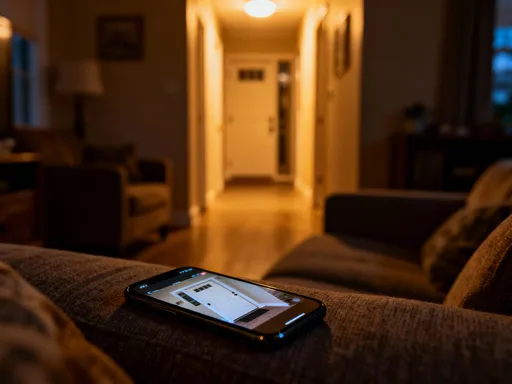
More than just notes: How a family ledger app quietly brought us closer together
You know those little moments—forgetting whose turn it is to take out the trash, missing a birthday, or arguing over who paid for groceries last? We’ve all been there. I used to think shared chores and memories just came naturally in a family. But over time, I realized we were drifting apart, not out of love, but from simple disconnection. Then we started using a family ledger app—not for budgets, but for life. It became our shared rhythm, a quiet tool that helped us see, appreciate, and grow together. What began as a way to remember chores turned into something deeper: a way to feel connected, seen, and supported in the everyday.
The Messy Reality of Family Life
Let’s be honest—family life rarely looks like the calm scenes in magazines or on social media. Ours certainly doesn’t. Most days feel like a balancing act: school runs, work deadlines, laundry that never ends, and conversations that get cut short because someone’s running late. I remember one Tuesday morning when everything seemed to fall apart. My youngest forgot her permission slip, my husband left his lunch at home—again—and I found myself yelling over who was supposed to pick up the dry cleaning. No one was angry, exactly. But there was this low hum of frustration, like we were all trying our best but moving in different directions.
The truth is, we weren’t failing. We were just invisible to each other. I’d stay up late folding laundry and assume everyone noticed. My son would walk the dog without being asked and feel unappreciated when no one mentioned it. My daughter kept track of her grandmother’s medication schedule but never told us how much it weighed on her. We were doing things—lots of them—but they went unseen, unspoken, and often unthanked. And over time, that invisibility started to matter. It wasn’t that we didn’t care. It was that we couldn’t see each other’s care.
That’s when I started thinking about systems. Not rigid schedules or chore charts with gold stars, but something gentler. Something that didn’t feel like another demand on our time, but like a quiet helper. I’d heard about family ledger apps before, but always assumed they were for budgeting—tracking grocery bills or vacation costs. But then a friend mentioned she used one to remember her kids’ soccer games, her husband’s travel days, and even small things like who last refilled the soap dispenser. It sounded strange at first. But the more I thought about it, the more it made sense. What if we could make the invisible visible? Not to police each other, but to notice, appreciate, and support?
Finding the Right Tool—Not Just for Money
So I started looking. And honestly, it was overwhelming. There are dozens of apps that claim to organize family life. Some looked like spreadsheets with too many columns. Others felt like social media, pushing notifications every five minutes. I didn’t want pressure. I didn’t want competition. I didn’t want my family to feel like we were being graded on participation. What I wanted was something warm, simple, and flexible—like a digital kitchen table where everyone could leave a note, check a box, or share a smile.
After testing a few, we landed on one that felt just right. It wasn’t the fanciest, but it had the things we needed: shared checklists, gentle reminders, private notes, and a little section called “Appreciations” where anyone could post a quick thank-you. No points. No rankings. No public shaming if something went undone. Just a soft chime when your name came up for trash duty, and a space to say, “I saw what you did, and it mattered.”
The biggest surprise? It wasn’t about money at all. Yes, we could track expenses if we wanted to—but we barely used that feature. Instead, we used it for the in-between moments: the school project due next Thursday, the dog’s flea treatment schedule, the fact that Mom has a doctor’s appointment on Friday. We even added a recurring note: “Check in with Dad this week—he’s been quiet.” It became less of a to-do list and more of a care list. And the best part? Everyone could use it, even my mother-in-law, who still calls Wi-Fi “the wireless.” The app didn’t ask us to change who we were. It just met us where we were.
The First Steps—Small Wins Build Trust
Change doesn’t happen overnight. I’ll admit, when I first suggested the app, there was eye-rolling. My teenager muttered, “Now we need an app to remember to take out the trash?” And I get it. It did sound a little much. So we started small. Just one shared list: weekend chores. That was it. No pressure. No rules. Just a place to see what needed doing.
And then—magic. On Saturday morning, I walked into the kitchen and saw the recycling bins already on the curb. I checked the app. My son had marked it done. No reminder. No nagging. Just a quiet checkmark. I didn’t cheer. I didn’t make a big deal. But inside, I felt this little swell of pride and relief. It wasn’t about the bins. It was about him seeing the list, deciding to act, and knowing someone would notice.
That tiny win opened the door. We added a “Family Dates” section. At first, it was just reminders: dentist appointments, parent-teacher conferences. But then my daughter added, “Ice cream after swim lesson?” and tagged her brother. He responded with a laughing emoji. We started using it for birthdays—setting alerts two weeks ahead so no one was last-minute scrambling. We even tracked small kindnesses: “Brought Mom tea when she was working,” “Helped sister with math homework.” These weren’t grand gestures. But they were visible. And visibility, it turns out, is a form of love.
Seeing Progress—How Tracking Changed Our Perspective
One Sunday evening, I clicked on the weekly summary. I expected to see what we’d missed—unfinished tasks, forgotten errands. But instead, the app showed me what we’d done. Twenty-three items checked off. Five family meals cooked together. Three spontaneous hugs logged in the “Good Moments” section. And one note from my husband: “Saw the laundry was folded. Thank you, love.”
I’ll admit, I cried. Not because the laundry was done—though that helped. But because I finally saw our family life not as a series of failures to keep up, but as a quiet, steady rhythm of care. The app didn’t change our behavior. It changed our awareness. Suddenly, I could see the patterns: how my daughter took on extra chores when I was stressed, how my husband remembered to refill the kids’ water bottles every morning, how my son quietly fed the cat every night before bed.
During one particularly rough week when I was sick with the flu, the app showed something unexpected: my son had marked “Make Mom soup” twice. I hadn’t even known. He’d just done it, left it on the table, and gone back to his room. But there it was—in black and white. A small act, invisible in the moment, but monumental when seen. That’s when it hit me: tracking didn’t create connection. It revealed the connection that was already there, buried under the noise of daily life. We weren’t doing more. We were finally seeing each other.
Growing Together—From Tasks to Traditions
Once the app became part of our routine, something beautiful happened: we started using it not just for chores, but for joy. We created a “Family Wins” section. Every Sunday, we’d add one good thing from the week. My daughter wrote, “First A on a science test.” My husband added, “Fixed the porch light without calling a handyman.” I put, “Slept through the night—small victory.” It became a ritual, something we looked forward to.
We also started adding photos and voice notes. There’s a clip of my son singing a silly song while setting the table. A picture of our dog wearing birthday goggles. A scanned copy of my grandmother’s apple pie recipe, uploaded by my daughter after she found it in an old notebook. These weren’t just memories—they were proof of life happening, together. The app became less of a tool and more of a scrapbook, a living record of who we were becoming.
We even started planning traditions with it. “First campfire of the year,” “Visit the pumpkin patch,” “Write letters to our future selves.” We set recurring events, like “Monthly Family Meeting” and “Gratitude Walk.” The app didn’t force these moments. It held space for them. And in that space, we found room to breathe, to connect, to be us. What began as a chore list had become a love letter—to our past, our present, and the family we’re still building.
Challenges and Adjustments—Keeping It Real
Of course, it wasn’t all smooth sailing. There were weeks when no one opened the app. Times when reminders were ignored. My husband once joked, “If I have to hear that chime one more time, I’m deleting it.” And my daughter said it felt “weird” to log a hug like it was a homework assignment. I listened. We talked. And we adjusted.
We decided: no penalties. No guilt. If something didn’t get done, it just stayed on the list. We turned the weekly check-in into a casual chat over popcorn, not a formal review. We agreed that private notes would stay private—no peeking. And we gave ourselves permission to step back when it felt like too much. The app wasn’t in charge. We were.
The biggest shift? Letting go of perfection. We stopped expecting everyone to use it the same way. My son liked checking things off. My daughter preferred adding photos. My husband used it mostly for reminders. And that was okay. The app worked because it was flexible, not rigid. It served us, not the other way around. And when we stopped treating it like a test and started treating it like a tool, it came alive in ways I never expected.
A Fuller Picture—What We’ve Gained Beyond Lists
Now, when I look back at the last two years, I don’t see a list of completed tasks. I see a family that learned to see each other. I see my son, who used to disappear into his room after school, now leaving little notes in the app: “Made your coffee. You looked tired.” I see my daughter, who once felt overlooked, now confidently assigning herself tasks and celebrating her wins. I see my husband and me, no longer keeping mental score of who did what, but sharing a quiet smile when we see each other’s names on the “I’ve got this” list.
The app didn’t fix everything. We still have messy days. We still forget things. But now, when frustration rises, I don’t jump to “No one helps” or “I’m doing it all.” I open the app. I scroll back. And I remember: last week, my daughter cleaned the bathroom because she knew I was overwhelmed. The week before, my husband took the dog to the vet so I could sleep in. These aren’t grand rescues. They’re quiet acts of love, easy to miss in the moment but powerful when seen.
More than anything, the app taught us that connection isn’t built in big moments—it’s woven in the small, daily threads of attention. It taught us that technology, when used with heart, doesn’t pull us apart. It can bring us closer. It won’t replace hugs, conversations, or time together. But it can help us notice what’s already there. It can turn the invisible into something we can touch, share, and cherish.
If you’re feeling disconnected, overwhelmed, or just a little unseen in your family life, I’m not saying an app will solve everything. But I am saying this: sometimes, a small tool can create space for big feelings. It can help you see the love that’s already present, even on the messy days. And in a world that moves too fast, that kind of clarity is its own kind of magic. We’re not perfect. But we’re trying. We’re noticing. And slowly, quietly, we’re growing—together.