Just five minutes of peace? That’s how VR retrained my brain to focus
Just five minutes of stillness. That’s all I asked for. And yet, for years, it felt impossible. My mind was a browser with 47 tabs open—half of them frozen, a few playing loud ads, and none of them letting me find what I actually needed. I’d lie in bed scrolling, not because I wanted to, but because my brain couldn’t shut down. I wasn’t lazy. I wasn’t broken. I was just… overloaded. Then one day, a friend handed me a VR headset and said, ‘Try this. Not for games. For breathing.’ I laughed. But I tried it. And in less than a week, something shifted. Not my life—my mind. I could think again. I could focus. And it all started with five quiet minutes a day.
The Overwhelm Loop: When Constant Noise Becomes Normal
Let’s be honest—most of us aren’t living in the moment. We’re living in the notification. The ping of a text, the buzz of an email, the endless scroll through photos of people we haven’t seen in years. We tell ourselves we’re staying connected, but what we’re really doing is fragmenting our attention into tiny, unusable pieces. I used to pride myself on multitasking—juggling dinner prep, a work call, and helping my daughter with homework, all while checking my phone every 90 seconds. But here’s the truth: I wasn’t doing any of it well. I burned the rice. I missed part of the call. And I snapped at my daughter when she asked the same question twice. I wasn’t failing because I wasn’t trying. I was failing because my brain had no space to focus.
It wasn’t just the distractions. It was the constant low hum of mental noise. The to-do list that never ended. The guilt about what I hadn’t done. The anxiety about what was coming next. I’d sit down to read a book and realize five minutes later I’d read the same paragraph three times. I’d start a conversation and lose the thread halfway through. My body was present, but my mind was miles away. I thought this was just how adulthood felt—busy, tired, stretched too thin. But then I started wondering: what if it didn’t have to be this way? What if the problem wasn’t me, but the environment I was trying to survive in? A world designed to grab attention, not protect it.
I wasn’t looking for another productivity app. I didn’t need another calendar reminder or a fancy planner. I needed my brain back. I needed to remember what it felt like to be present—not just physically, but mentally and emotionally. And that’s when I realized: I wasn’t just distracted. I was out of practice. No one had taught me how to focus anymore. We don’t train our attention like we train our bodies. We don’t warm up our minds before the day begins. So when everything demands our focus at once, of course we break. Of course we feel drained. Our brains aren’t broken. They’re just exhausted from never being allowed to rest.
Discovering VR Beyond Entertainment: A Quiet Surprise
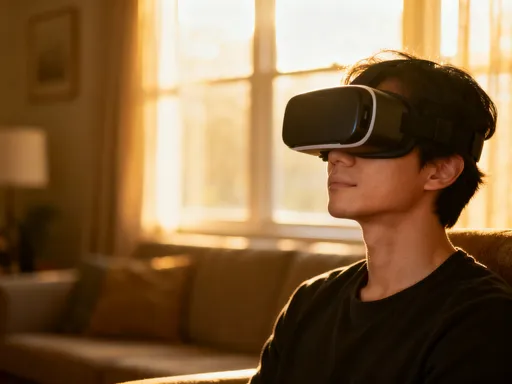
I’ll admit it—I used to think VR was for gamers. The kind of people with fancy setups and headsets that made them look like astronauts. I saw it as another screen, another way to escape. But then my friend Sarah told me she’d been using VR to meditate. ‘Meditate?’ I said. ‘With a headset?’ She laughed and said, ‘Just try it. It’s not what you think.’ Skeptical, I agreed. She sent me a link to a simple app called ‘Calm Space’—nothing flashy, no explosions or fantasy worlds. Just a quiet forest, soft light filtering through the trees, and a gentle voice guiding me to breathe.
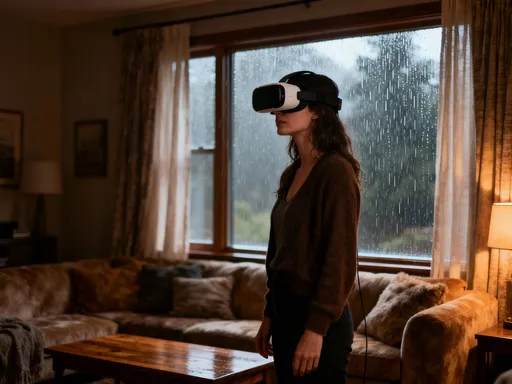
The first time I put on the headset, I expected to feel silly. Instead, I felt… still. The moment the forest appeared, something in me relaxed. It wasn’t real, but it felt real enough. The sound of a distant stream. The rustle of leaves. The way the light moved as the sun rose behind the mountains. I wasn’t being asked to do anything. No likes to collect. No levels to beat. Just breathe. Just be. And for the first time in years, I wasn’t thinking about what came next. I was just there.
What surprised me most wasn’t the visuals—it was the effect. After just five minutes, I took off the headset and felt calmer. Not sleepy. Not spaced out. Calm. Clear. Like someone had gently wiped the fog off my brain. I didn’t feel like I’d escaped reality. I felt like I’d finally returned to it. And the best part? I could do it again tomorrow. And the day after. No travel. No special outfit. No meditation cushion I’d never bought. Just five minutes, a headset, and the intention to be still.
How Virtual Stillness Trains Real Focus
Here’s the thing I didn’t expect: VR wasn’t just helping me relax. It was training my brain. Scientists call it neuroplasticity—the brain’s ability to change and adapt based on experience. And what we practice, we get better at. If we practice scrolling, we get better at distraction. If we practice stillness, we get better at focus. The VR sessions I was doing weren’t passive. They were like mental workouts. Each time I entered that quiet forest, I was teaching my brain to stay present, to resist the urge to jump to the next thought.
It’s similar to meditation, but with a little more support. For years, I’d tried to meditate the ‘old-fashioned’ way—sitting cross-legged, eyes closed, trying to quiet my mind. I lasted two minutes before wondering if I’d left the stove on. But VR gave me something to focus on—a peaceful scene, a guiding voice, a rhythm to follow. It wasn’t about emptying my mind. It was about giving it a safe place to rest. And over time, that rest became easier to find, even without the headset.
Think of it like building a muscle. You wouldn’t expect to lift 50 pounds on your first day at the gym. You start small. Same with focus. Five minutes of VR stillness is like a bicep curl for your attention. Do it every day, and something shifts. You start to notice when your mind wanders—and you get better at bringing it back. You become more aware of your mental habits. And slowly, you reclaim control. It’s not magic. It’s repetition. It’s practice. It’s showing up, day after day, and saying: I’m not going to let noise run my life.
From Headset to Homework: Innovation in Daily Thinking
The changes didn’t stay in the forest. They came with me into real life. At first, it was small things. I noticed I could read a whole article without checking my phone. I remembered where I put my keys. I finished a work task without feeling the urge to switch tabs every 30 seconds. But then, something bigger happened. I started thinking more clearly. Not just focusing, but creating. Ideas I hadn’t had in years began to surface. During a walk, I came up with a new way to organize our family calendar. At work, I solved a problem that had been stuck for weeks—just by stepping back and seeing it differently.
It wasn’t that I’d become a genius. It was that my brain finally had space. When you’re constantly distracted, your mind is too cluttered for real innovation. But when you practice stillness, you create mental room for new thoughts to form. It’s like cleaning out a drawer—you don’t realize how much you’ve been tripping over the junk until it’s gone. I wasn’t doing anything different in my day. I was just thinking from a different place—a place of calm, not chaos.
One afternoon, my son asked me a complicated math question. Normally, I’d panic, pull out my phone, and look it up. But this time, I paused. I took a breath. And instead of rushing to an answer, I thought through it. Slowly. Step by step. And I figured it out. Not because I’m suddenly a math whiz, but because I wasn’t overwhelmed. My brain wasn’t flooded with other thoughts. I was present. And that made all the difference. That moment didn’t just help my son—it reminded me that I’m capable. That I don’t always need to rush. That thinking can be slow, and that’s okay.
Family Time That Feels Different: A Shared Calm
Here’s what no one tells you: when you change your focus, you change your relationships. I used to think being present for my family meant being physically there—making dinner, helping with homework, attending games. But presence isn’t just about location. It’s about attention. And I realized I’d been showing up with half my mind elsewhere—planning the next meal, replaying an email, worrying about tomorrow.
After a few weeks of VR practice, I noticed a shift. I was calmer. And that calm didn’t stay with me—it spread. At dinner, I actually listened to what my kids were saying. Not just heard the words, but followed the story. I didn’t interrupt. I didn’t check my phone. I just listened. And they noticed. My daughter said, ‘Mom, you’re not on your phone tonight.’ I said, ‘No, I’m not. I’m right here.’ And for the first time in a long time, I meant it.
My husband said I seemed ‘lighter.’ Not less busy, but less tense. Our conversations felt deeper. We weren’t just exchanging updates—we were connecting. Even our quiet moments felt different. Instead of sitting on the couch in separate worlds, we started talking again. Laughing. Sharing. It wasn’t because we had more time. It was because we were using the time we had more mindfully. My focus wasn’t just improving my life—it was improving our life. And that made the practice feel even more worthwhile.
Building the Habit: Making VR Work in Real Life
I know what you’re thinking: ‘I don’t have time for this.’ Or ‘It sounds expensive.’ Or ‘I’d feel ridiculous wearing a headset in my living room.’ I thought all of that too. But here’s what I’ve learned: small changes don’t require big sacrifices. I didn’t start with 30 minutes. I started with five. I didn’t buy the most expensive headset. I borrowed one from Sarah. And I didn’t do it at a ‘perfect’ time. I did it while my coffee brewed. Or during my lunch break. Or right before bed.
The key wasn’t perfection. It was consistency. And the more I did it, the more I wanted to keep going. If you’re curious, start simple. Look for apps labeled ‘relaxation,’ ‘mindfulness,’ or ‘guided meditation’ in your headset’s store. Many are free or low-cost. Try a session in the morning to set the tone for your day. Or use it in the afternoon to reset after a busy stretch. Don’t worry about doing it ‘right.’ There’s no wrong way to be still.
If you’re worried about motion sickness, start with seated experiences in calm environments—no flying, no fast movement. And if you feel silly? Good. That means you’re trying something new. I still smile when I put on the headset. But I also know what’s waiting on the other side: peace. Clarity. A few minutes where I’m not being pulled in ten directions. And honestly? That’s worth a little awkwardness.
Reclaiming Rhythm: A Life That Moves with You, Not Against You
Life hasn’t slowed down. The emails still come. The kids still need help. The to-do list is still long. But my relationship to it all has changed. I’m not fighting the current anymore. I’m learning to swim with it. The five minutes of VR haven’t given me more time—but they’ve given me more presence. And that makes all the difference.
I don’t use VR to escape my life. I use it to return to it. To show up as the person I want to be—calm, focused, kind. I’m not perfect. Some days I skip the session. Some days my mind still races. But now I know how to reset. I know how to find stillness, even in the middle of chaos. And that’s a skill I can’t put a price on.
This isn’t about technology replacing real life. It’s about using technology to protect real life. To guard our attention. To reclaim our focus. To remember what it feels like to be fully here. So I’ll ask you what I asked myself: what could five minutes of calm give you? Not a cure. Not a miracle. Just a quiet space to breathe, to think, to be. What if that small moment could change everything? Not overnight. But day by day. Breath by breath. Moment by moment. That’s not escape. That’s evolution. And it’s waiting for you, one quiet minute at a time.